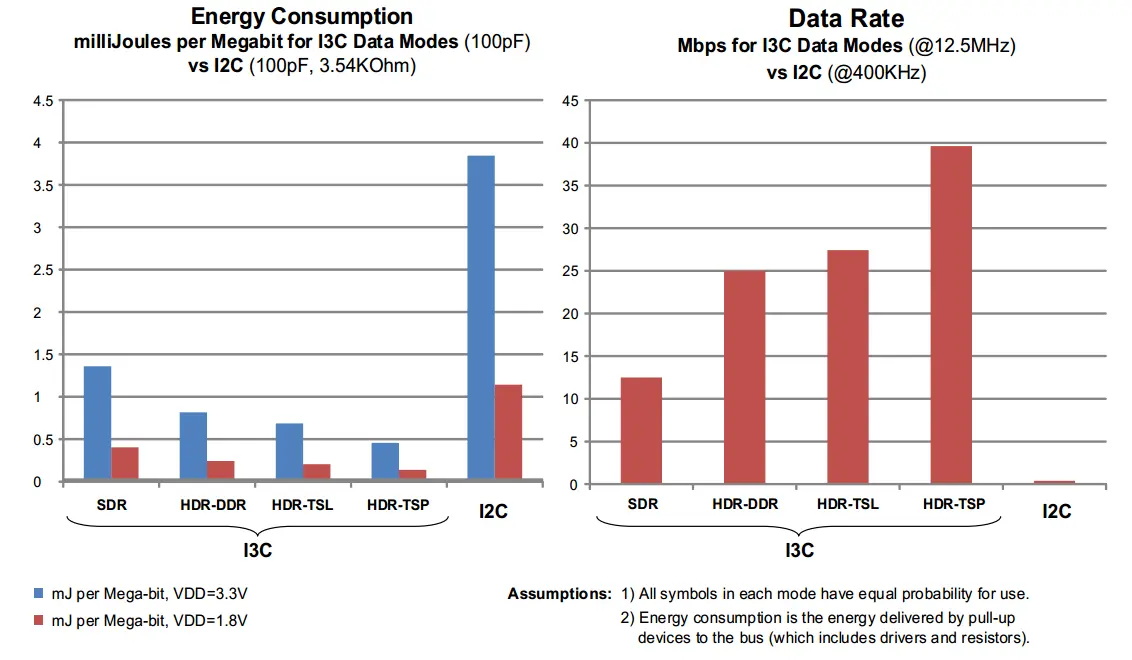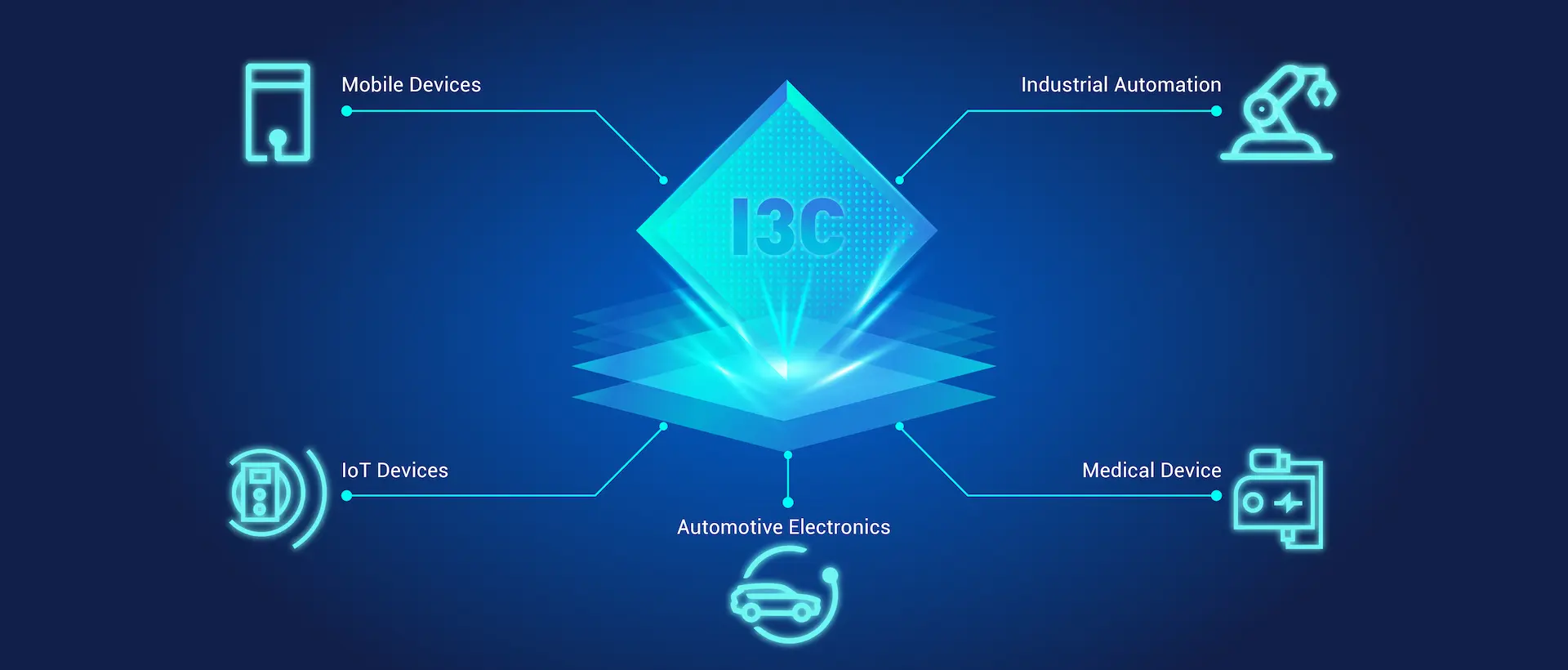
Innosilicon's I3C (Improved Inter-Integrated Circuit) implementation is compatible with MIPI_I3C_Specification_V1.0 and with I2C. Compared with I2C, I3C is more powerful, offering higher transfer speeds, in-band interrupts, CRC checking and more. The I3C protocol now comes in MIPI and JEDEC variants: MIPI I3C is typically used for sensor/IoT data transfer, and JEDEC I3C for memory chip configuration.


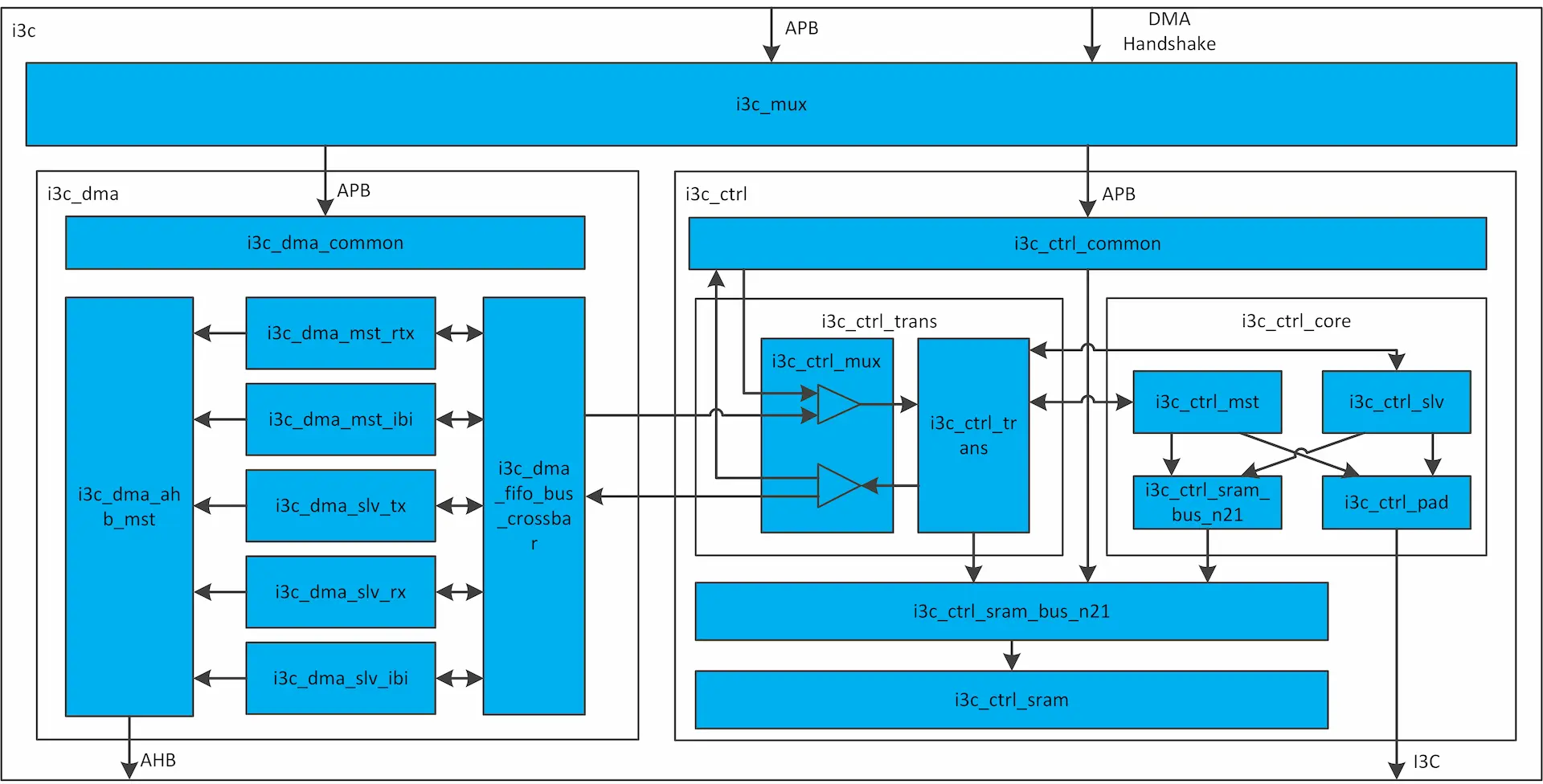
Innosilicon's I3C IP supports I3C master/slave/secondary roles and complies with JESD403-1B and MIPI I3C. Users read and write internal registers through an APB 3.0 interface, and DMA is also supported for writing to or reading from the internal data buffers.

High Speed
Configurable
High Reliability
Low power
Two-wire serial interface: SDA/SCL
Supports main master/secondary master/slave roles
Supports FM/FM+/SDR/HDR-DDR/HDR-TSL/HDR-TSP speed modes
Compliant with JESD403-1B and MIPI_I3C_Specification_V1.0
Independent data and command buffers with configurable depth
Device information buffer for the master
Up to 65536 bytes written/read per command
Supports in-band interrupts with or without data
Backward compatible with I2C
SCL frequency up to 12.5MHz in I3C mode
Supports CRC/parity checking
Supports mixed fast bus for lower effective rates
Supports broadcast and directed CCC transfers
Supports private writes and reads
Interrupt interface for reporting interrupts to software
DMA handshake interface or internal DMA for data buffers
APB 3.0/4.0 for configuration and AHB/AXI interfaces for the IP's internal DMA
Configuration clock and core clock can be synchronous or asynchronous
Datasheet
Integration guide
Software driver design guide
Front-end simulation environment and reports/guides
If the customer would like us to provide back-end and layout services, the following additional deliverables are included:
GDSII layout and layer map for foundry merging
Place-and-route LIB and LEF views of the AFE
LVS and DRC verification reports