
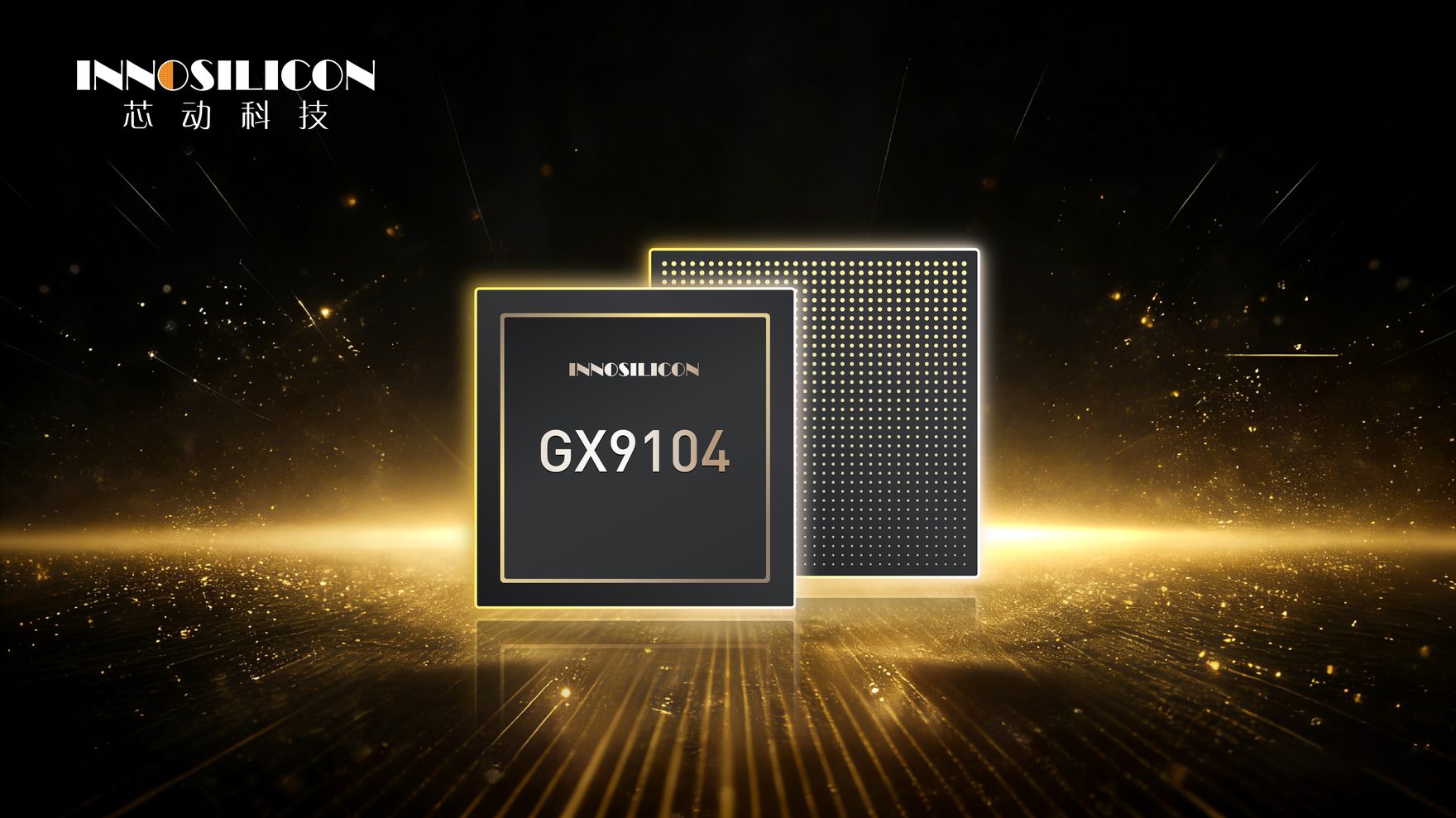
As demand for AI computing power explodes, high-speed interconnect chips have become one of the most critical links in the industry chain. Drawing on nearly 20 years of experience in core IP, Innosilicon has used an advanced process node to launch world-leading 104/120-lane PCIe Gen5 switch chips (product codes GX9104/GX9120). With in-house intellectual property and outstanding performance, they bring new momentum to AI infrastructure. The launch marks a key leap for domestic high-end PCIe switch chips from R&D to market, breaking a landscape long dominated by overseas vendors and filling a gap in high-end domestic interconnect chips, with every key metric at an industry-leading level.
Core architecture and performance: full support for high-end scenarios
As the "nerve center" of new AI infrastructure, a PCIe5 switch chip carries high-speed data transfer and switching between CPUs, GPUs, NICs and SSDs, and is key to breaking through the "memory wall" and the "interconnect wall". Built on fully in-house low-level IP and an innovative architecture, Innosilicon's chip targets the industry's pain points head-on, with features and performance benchmarked against the international market leaders. It uses a fully cross-connected, non-blocking switch architecture with 120 lanes and 30 flexibly configurable ports, 32GT/s per lane, and supports multi-host, end-to-end and non-transparent transfer modes, fitting seamlessly into data centers, ultra-low-latency AI servers, high-performance computing and enterprise storage.
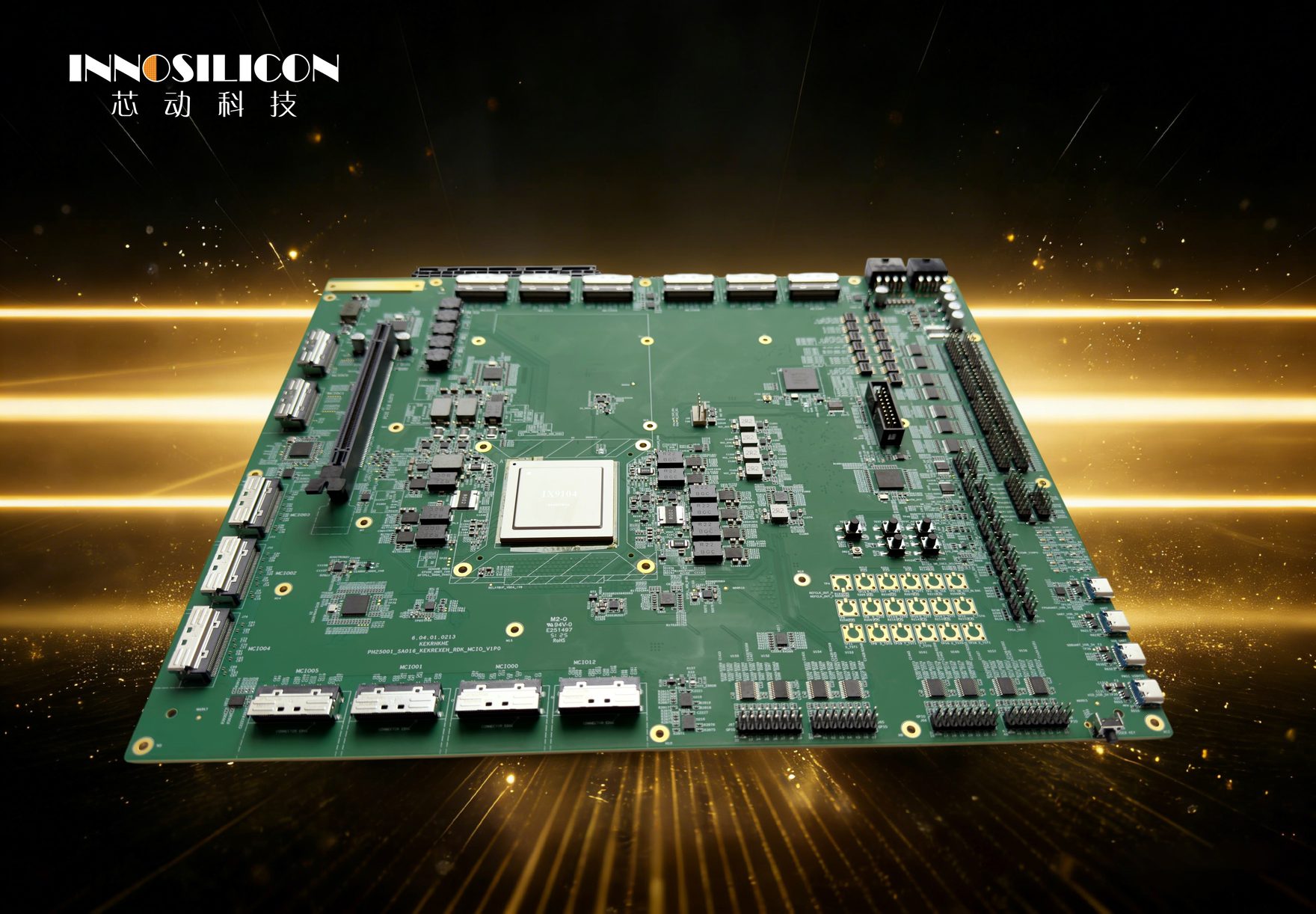
Built on Innosilicon's deep IP expertise, its SerDes integrates multi-stage FFE, one-click adaptive CTLE and 14-tap DFE signal processing, transmitting reliably over 36dB of insertion loss and operating across a wide -40°C to 105°C temperature range, demonstrating excellent signal integrity and robustness in complex environments.
Key product highlights:
- 120 lanes enable efficient interconnection of 16 cards, for better scale-up and scale-out solutions;
- Ultra-low 115ns latency fully unlocks GPU compute for real-time large-model AI workloads;
- High throughput, with intelligent switch scheduling algorithms that improve bandwidth utilization;
- End-to-end redundancy and error-correction mechanisms for highly reliable system operation;
- NTP hot-plug support for plug-and-play operation and system flexibility;
- Low power consumption for green, energy-efficient and sustainable computing;
- Triple protection with a security engine, physically unclonable keys and a software firewall.
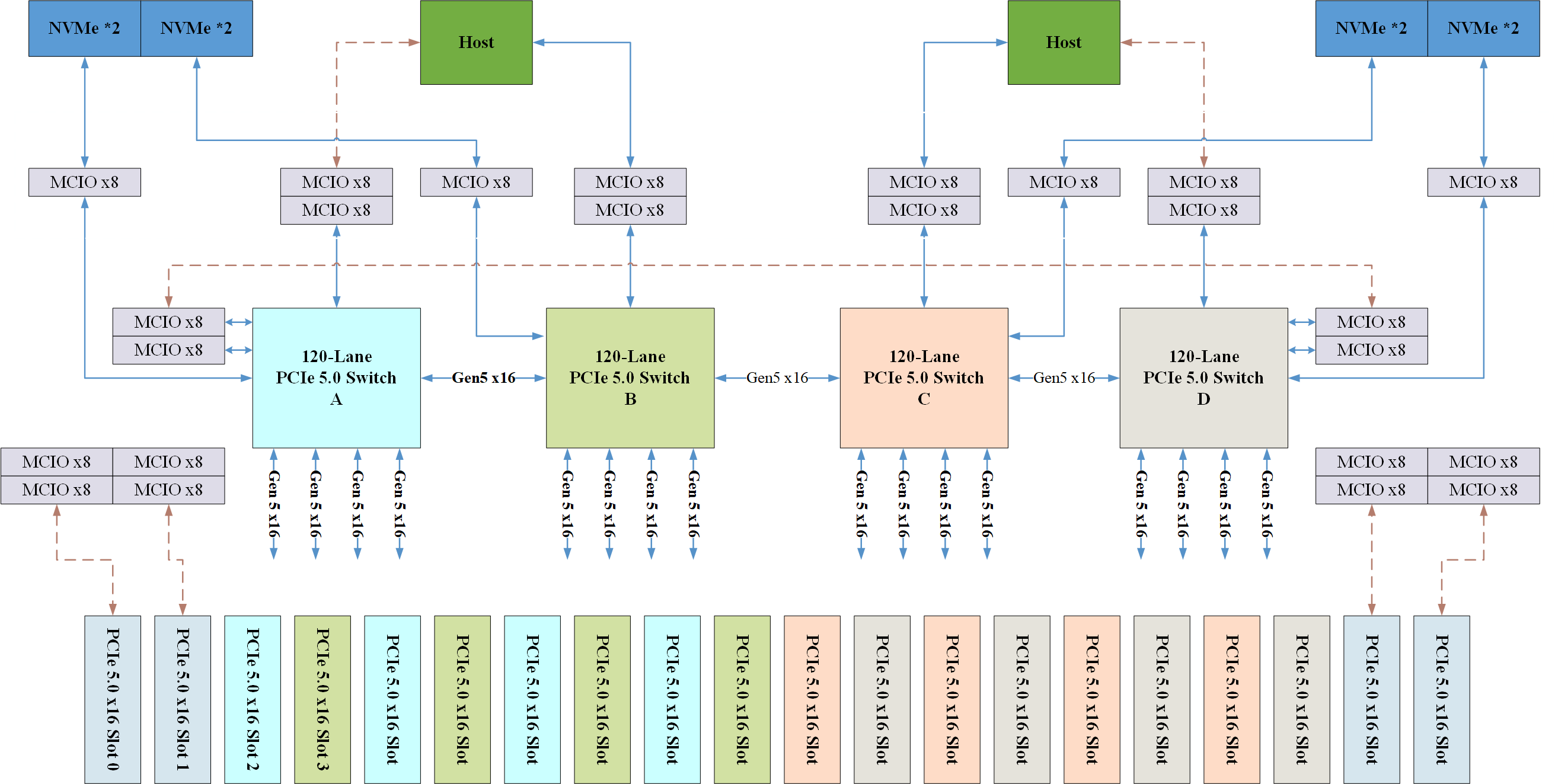
Ecosystem: defining a new interconnect ecosystem with industry partners
As one of the first Chinese vendors to mass-produce PCIe switch chips, Innosilicon has a proven commercial track record. Its PCIe Gen4/3 products are in volume production and have entered the supply chains of more than 40 leading partners, including ZTE, Hengwei Technology and Lenyan Technology, with more than 50 deployed applications and large-scale shipments across servers, communication platforms, network security, industrial control, edge computing, storage expansion and embedded systems. The series has completed compatibility certification with mainstream domestic and international CPU, GPU, NIC and SSD partners, forming an end-to-end, self-controlled interconnect solution.
Looking ahead: a complete, self-developed product portfolio
Global demand for PCIe and optical switch chips keeps rising, while the high-end market has long been dominated by overseas vendors. Focused on original low-level technology, Innosilicon continues to invest in R&D and expand its portfolio. Its full PCIe Gen5 and Gen4/3 product lines are in volume production, and it is already developing 144-lane PCIe 6.0/CXL 3.0/PCIe 7.0 and 112/224G UALink switches as well as 112G/224G high-speed SerDes optical-electrical interconnect products, building a complete portfolio from entry level to high end and a high-speed CPO platform.
With nearly 20 years of fully in-house IP behind it, Innosilicon has long worked across the three tracks of compute, storage and connectivity. Through independent innovation it is moving domestic AI high-speed interconnect chips from "functional" to "high-performing" and "technology-leading", providing core support for green high-performance computing and SuperNode interconnects.
← Back to News Center